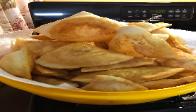
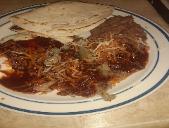
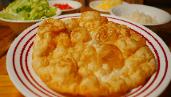
| NEW MEXICO DINNER PLATES AND DISHES OF THE 1940'S AND 50'S In what is to be the narrative of much of my life I share in a chapter entitled Historias Alrededor De La Mesa En Mis Abuelas Cocina, a very long title. Breaking it down it is merely Story Shared Around The Table In My Grandma's Kitchen. The story takes place in northern New Mexico in Tramperos or Agua Negra, Holman-Mora County. Going back to the late forties and fifties, much of what we call a meal is what we serve at the dinner table is the same as today. Gatherings around the kitchen table at grandmas would consist of great uncles and aunts as well as my uncles and aunts and some children. The elders would share theIr stories while snacking on the foods laid out on the table. Mom and grandma were usually up a couple of hours before everyone else. They would get the fire going in the Majestic, the state of the art wood burning stove and make a fresh batch of tortillas. From time to time they would bake bread, before the Majestic they used the adobe oven behind the house to bake their bread. As a child, our first task after washing up was to go and gather eggs for breakfast. We brought in the eggs to the order of freshly fried potatoes, bacon, red chile or chile caribe, now this meal is called huevos rancheros. We would also have a bowl of atole, or as we knew it, chquewa, which was I believe was the Native American name. Lunch, for the most part, was simple. A cut of meat, usually lamb or pork and for sure potatoes and an assortment of red chile. We seldom had any green chile as the only method we had to keep green chile was to can it, and this was a difficult task. I might add that everything that was fried in lard. What was also unique to those days what you seldom saw anyone who was overweight. The men were out most of the day working on the farm, the children to young to work were running all over the place, both hills or valleys or climbing trees and eating green apples sprinkled with salt. It can be easily stated that out of New Mexico, which I believe is the heart of the southwest, those amazing foods have come to adorn the tables of many Americans. Agua Negra or Tramperos are but a small portion of Nevo Mexico, but for the Quintana/Chavez it was the center of the universe when it came to New Mexico food. The meals we ate daily came from the souls of my great, great, great grandparents on the Chavez side of our family. It was from the Pueblo in Taos and the Picuris Pueblo in Penasco we received these unwritten recipes. The last meal of the day for us was the supper meal. What was consistent with this meal each time we ate was a bread product mainly tortillas, homemade baked bread or from time to time bunuelos or Indian fried bread. Sopaillias came much later into our diet, for us, it was bunuelos. Fried potatoes were frequently served at the supper unless we had a beef cut of some sort then they would be mashed with gravy. Red chile was the gravy of choice for any other kind of meat be it pork, lamb or chicken, although we also used white gravy with the chicken. Pinto beans were served frequently along with tortillas or sopaillias and green chile which my mom would can before getting a freezer. The green chilies would be roasted on hot plates on the stove or in the oven, much later we started roasting the green chile on the barbecue grill. An extra dish could be wild spinach or quelites or verdolagas which would be picked in the fields or alongside a country road. We would also enjoy calavacitas made with the small pumpkins, never used squash. A few items missing from any kind of a meal missing from our supper table were the likes of tacos, tostadas, burritos, and tamales. What we enjoyed was the occasional meal that included posole and menudo, and top on my list were enchiladas, which I considered the real test of New Mexico food. Early on, mom and grandma made enchiladas with corn tortillas, which were rolled and placed on a flat pan. A special treat was enchiladas made with blue corn tortillas. They had a unique taste of their own we did not have them often, but it was great when we did. While the greater part of the United States was impacted with the great depression so were the families of Agua Negra. The saving grace of this little village for the Chavez family was there tiny ranchito of maybe 20 acres. It was on this small parcel of land that they provided for themselves and others in the village. With a handful of livestock which included half dozen cows, along with some pigs, lambs, and chickens. They also had the land to grow gardens of pumpkins, corn, potatoes, onions, and patches of cilantro and beans. There were also small orchards of apples, plumbs and the river banks filled with chokecherry trees. Once a year there would be the butchering of a hog. Not one part of the pig would go to waste, besides the bacon and ham, we would enjoy chicharrones. Cut up into small cubes the pieces of fat and skin would be fried in an open pit fire until crisp and enjoyed for days. Not wasting any part of a lamb when butchered once again a favorite would be cooking the tripitas or intestines and the blood was a delight. With fried potatoes on the side and chile and tortillas this would make a great meal. Perhaps the food described in the previous paragraph may be strange or unknown to many from New Mexico, I have other foods that are were also served. Mom loved to make prune pies in the fall with the dried prunes we had picked earlier. This I believed was something handed down from her family members who lived in and around the Taos Pueblo. I made it a point to pick up prune pies when we would stop to visit distant cousins in Taos. Mom and dad enjoyed a pudding, which was made when the baked bread would harden. The base of this pudding was a syrup made of sugar, vanilla and the bread sprinkled with sharp cheddar cheese. I have never been much for cheese, so I avoid the bread pudding, nor the idea of eating the hard bread dipped in warm milk. Top on my favorites of New Mexico deserts was empanadas be they pumpkin or apple. It was for Christmas mom would make empanadas which included beef tongues, pork, anis, walnuts, pinon, raisins, sugar, and vanilla. I guess you could describe the ingredients as kind of mincemeat. The ingredients would be wrapped in dough pouches and deep-fried in lard. Family members from both sides made sure they came over for Christmas to eat these empanadas. It was a lot of work making them, and you needed at least two days to make this special dish, mom gave me her recipe. |